// seo & google ranking
Website Redesign SEO: How to Protect Rankings
Website redesign SEO protects valuable search visibility while the site structure, content, code, and design change. First, search loss usually…
Search visibility grows when a website is technically accessible, genuinely useful, and clear about the topics and locations it serves. Rankings are an outcome of many connected signals rather than a single optimisation. Our SEO guides cover crawlability, page structure, internal links, local relevance, helpful content, structured data, and performance measurement. They focus on improvements that benefit both visitors and search engines and can be maintained as the site grows. Start by removing crawl and indexing barriers, strengthen pages that already match valuable searches, and build supporting content around real customer questions. Priorities for this topic include Confirm important pages can be crawled, indexed, and understood.; Use unique titles, headings, descriptions, and useful on-page copy.; Connect related services, locations, and guides with descriptive links.; Measure qualified organic visits and conversions alongside rankings.. Before making changes, record a baseline that reflects the business result you care about. Apply one focused improvement, assign an owner, and set a review date. Compare the result with the baseline, document what was learned, and keep only the changes the team can maintain. The articles on this page provide deeper explanations and examples so you can move from a broad goal to a practical next action. Use this SEO and Google ranking collection as a working reference rather than a checklist to complete all at once. First confirm the audience, objective, constraint, available evidence, and resources. Then choose the article closest to the present decision and translate its recommendations into a small action plan. Review technical quality and customer experience together, because improving one while ignoring the other can create a misleading short-term result. Where a change affects privacy, security, accessibility, advertising claims, or contractual obligations, confirm the applicable requirements for your business and location. If several constraints are connected, contact Rays Developer for a joined-up review of strategy, content, design, development, and measurement.
SEO begins with making valuable pages accessible, indexable, understandable, and genuinely useful. Technical work, page optimisation, content, internal links, local relevance, and external authority support one another. Publishing more articles cannot compensate for blocked pages, broken links, unclear services, or missing measurement.
Review robots directives, sitemaps, response codes, canonical URLs, redirects, mobile usability, performance, titles, headings, structured information, and internal linking. Map each important page to a distinct search intent and customer need. Avoid creating several weak pages that compete for the same topic or location.
Use Search Console, analytics, crawl data, ranking trends, conversions, and customer language. Impressions and positions show visibility, while qualified organic visits and enquiries show business value. Indexation changes can take time, so separate technical confirmation from ranking expectations and record the date of major updates.
Fix critical crawl and indexation problems first, then strengthen commercial pages and their internal links. Build supporting content where it answers real research questions. Review results by topic and page, not only by a single site-wide score, and update priorities as new evidence appears.
Choose the article connected to a current decision, record the existing baseline, and turn the recommended checks into a short action list. Assign an owner and review date for each change. When the result is clear, keep the improvement or document what should be tested next.
Technical SEO starts by confirming that valuable URLs return the intended status, can be crawled, are indexable, use consistent canonicals, and appear in the correct sitemap. Review redirects, duplicate paths, robots directives, pagination, mobile rendering, speed, structured data, and internal links. Fixing access and duplication problems usually deserves priority over publishing more pages.
Map one clear search intent to each important page. The title, main heading, opening copy, supporting sections, images, links, and call to action should answer that intent naturally. Avoid creating several thin pages that compete for the same phrase. When related questions deserve separate articles, connect them through descriptive internal links and a coherent topic structure.
Measure impressions, clicks, landing-page engagement, conversions, indexation, and ranking groups rather than one isolated keyword. Search demand and results change, so compare trends across appropriate periods and annotate major site updates. Improve pages using real queries, customer questions, competitor gaps, and conversion evidence while preserving accurate, helpful information.
Website redesign SEO protects valuable search visibility while the site structure, content, code, and design change. First, search loss usually…
Rank on Google Maps by improving relevance, distance context, prominence, and the customer experience around the business. First, no one…
Local SEO checklist helps a business turn nearby searches into calls, visits, and qualified leads. First, strong local visibility needs…
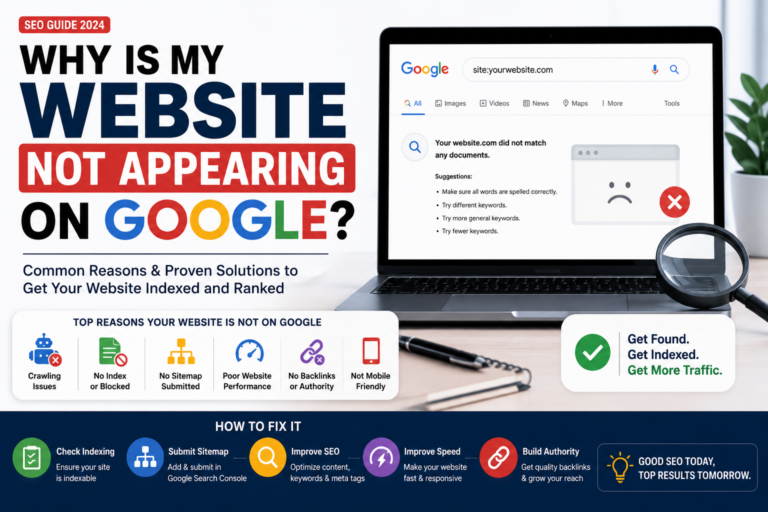
Is your website not showing on Google? First, do not assume the site is broken. Google must discover, crawl, and…