// shopify & e-commerce
Shopify SEO Checklist: How to Rank and Sell More
Shopify SEO checklist helps a store make products easier for people and search engines to find. First, strong rankings need…
A successful Shopify store makes products easy to discover, compare, trust, and buy on any device. The platform provides the foundation, while catalogue structure, merchandising, content, and operating discipline shape the customer experience. These Shopify and ecommerce guides cover store planning, development costs, product pages, navigation, conversion, apps, speed, and ongoing optimisation. They help merchants make choices that fit the current stage of the business instead of adding complexity too early. Use the articles to identify whether the next improvement belongs in discovery, product confidence, checkout, retention, or store operations. Priorities for this topic include Organise products around how customers browse and compare.; Make shipping, returns, payment, and support information easy to find.; Use apps only when the benefit exceeds speed and maintenance cost.; Track product views, add-to-cart, checkout, sales, and repeat purchase.. Before making changes, record a baseline that reflects the business result you care about. Apply one focused improvement, assign an owner, and set a review date. Compare the result with the baseline, document what was learned, and keep only the changes the team can maintain. The articles on this page provide deeper explanations and examples so you can move from a broad goal to a practical next action. Use this Shopify and ecommerce collection as a working reference rather than a checklist to complete all at once. First confirm the audience, objective, constraint, available evidence, and resources. Then choose the article closest to the present decision and translate its recommendations into a small action plan. Review technical quality and customer experience together, because improving one while ignoring the other can create a misleading short-term result. Where a change affects privacy, security, accessibility, advertising claims, or contractual obligations, confirm the applicable requirements for your business and location. If several constraints are connected, contact Rays Developer for a joined-up review of strategy, content, design, development, and measurement.
A successful Shopify or e-commerce experience connects product discovery, clear information, confident checkout, fulfilment, and post-purchase support. Design should make the catalogue easier to understand on mobile devices while preserving brand quality. Store operations and profitability are part of the customer experience, not separate technical details.
Plan products, variants, collections, filters, search, pricing, promotions, shipping, tax, payments, inventory, returns, and customer communication. Product pages should explain benefits, specifications, scale, materials, care, delivery, and included items accurately. Apps should be selected for a defined requirement and tested for cost, performance, and compatibility.
Measure product discovery, search use, product views, add-to-cart rate, checkout progression, conversion, average order value, returns, support questions, and repeat purchase. Traffic quality and product-market fit affect these numbers, so a low conversion rate should not automatically be treated as a design problem.
Fix the most important purchase barrier first. Improve navigation or search when customers cannot find products; strengthen information and imagery when they hesitate; simplify checkout or shipping communication when carts are abandoned. Test important journeys before and after every major change.
Choose the article connected to a current decision, record the existing baseline, and turn the recommended checks into a short action list. Assign an owner and review date for each change. When the result is clear, keep the improvement or document what should be tested next.
Store planning should connect the catalogue to fulfilment and customer support. Confirm product data, variants, collections, inventory sources, shipping regions, rates, taxes, payments, discounts, returns, notifications, and staff responsibilities. A beautiful theme cannot prevent operational confusion when sizes, stock, delivery expectations, or policies are unclear.
Design discovery around how customers compare products. Navigation, collection descriptions, filters, search, product recommendations, and internal links should reduce effort without generating uncontrolled duplicate URLs. Product pages need accurate benefits, specifications, images, variants, availability, delivery information, trust evidence, and mobile calls to action positioned for the real buying decision.
Review app requests carefully. Each app can add scripts, data access, recurring cost, styling conflicts, and maintenance. Prefer native capabilities or one well-supported tool when possible. Before launch, test navigation, search, variants, discounts, cart, checkout handoff, forms, emails, analytics, pixels, policies, and responsive layouts using realistic devices and orders.
Shopify SEO checklist helps a store make products easier for people and search engines to find. First, strong rankings need…
Shopify conversion rate improves when a store removes doubt and makes the next step easy. First, traffic quality matters, but…
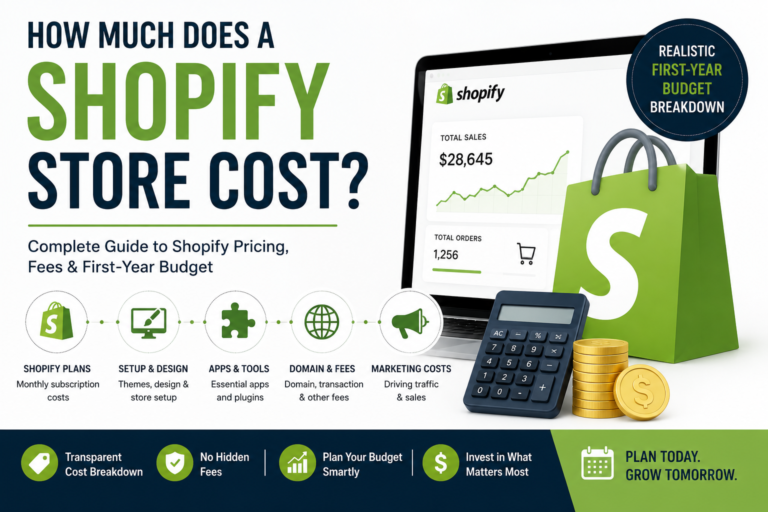
Wondering about Shopify store cost? For example, Shopify plan fees, themes, apps, design, and setup costs can all affect how…